Scotland Yard
Scotland Yard, the London metropolitan police, enters the narrative of The Strange Case of Dr Jekyll and Mr Hyde as the official arm of justice tasked with solving the brutal murder of Sir Danvers Carew. The force's investigation, led by Inspector Newcomen, quickly identifies Edward Hyde as the killer and uncovers damning physical evidence, yet it proves entirely incapable of capturing him. Hyde vanishes from the ken of the police as though he had never existed, and Scotland Yard's failure underscores the limits of institutional authority against a supernatural evil that operates outside the reach of conventional detection.
The Investigation of the Carew Murder
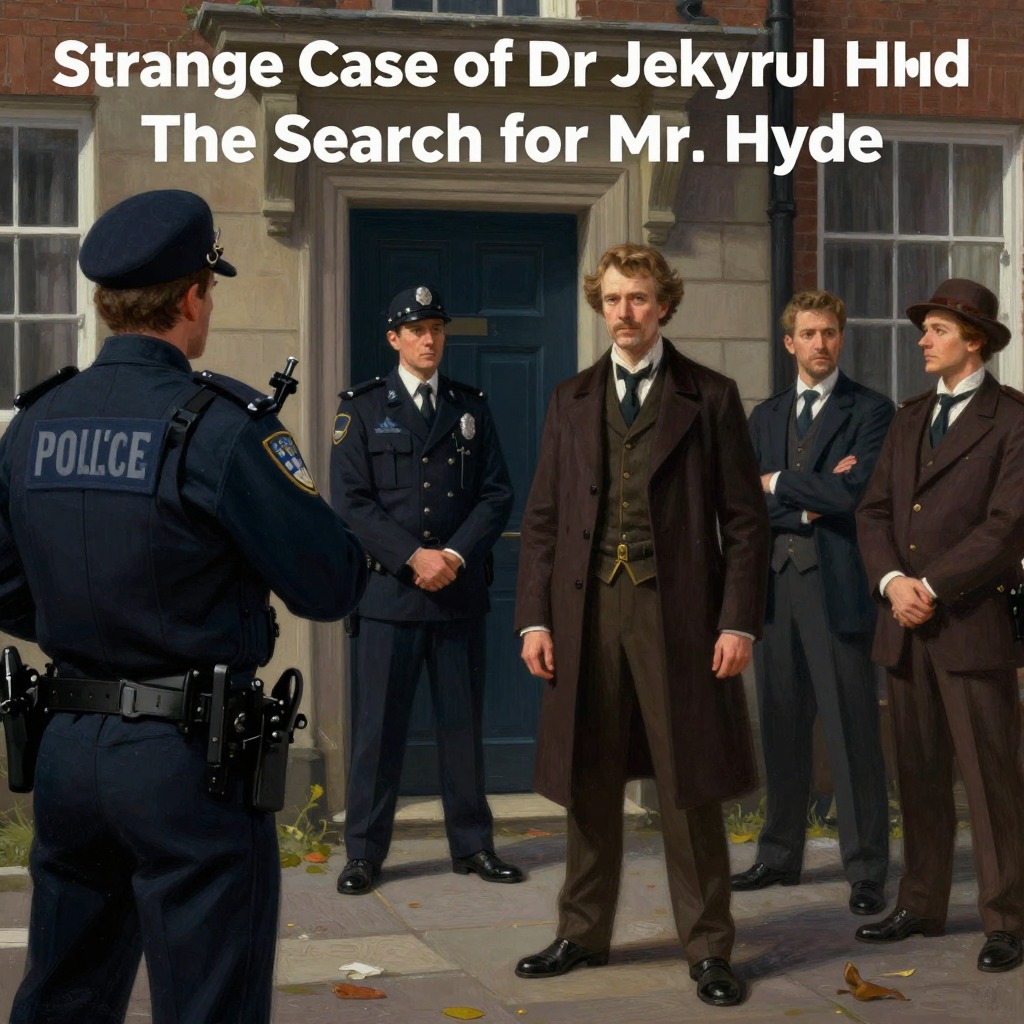
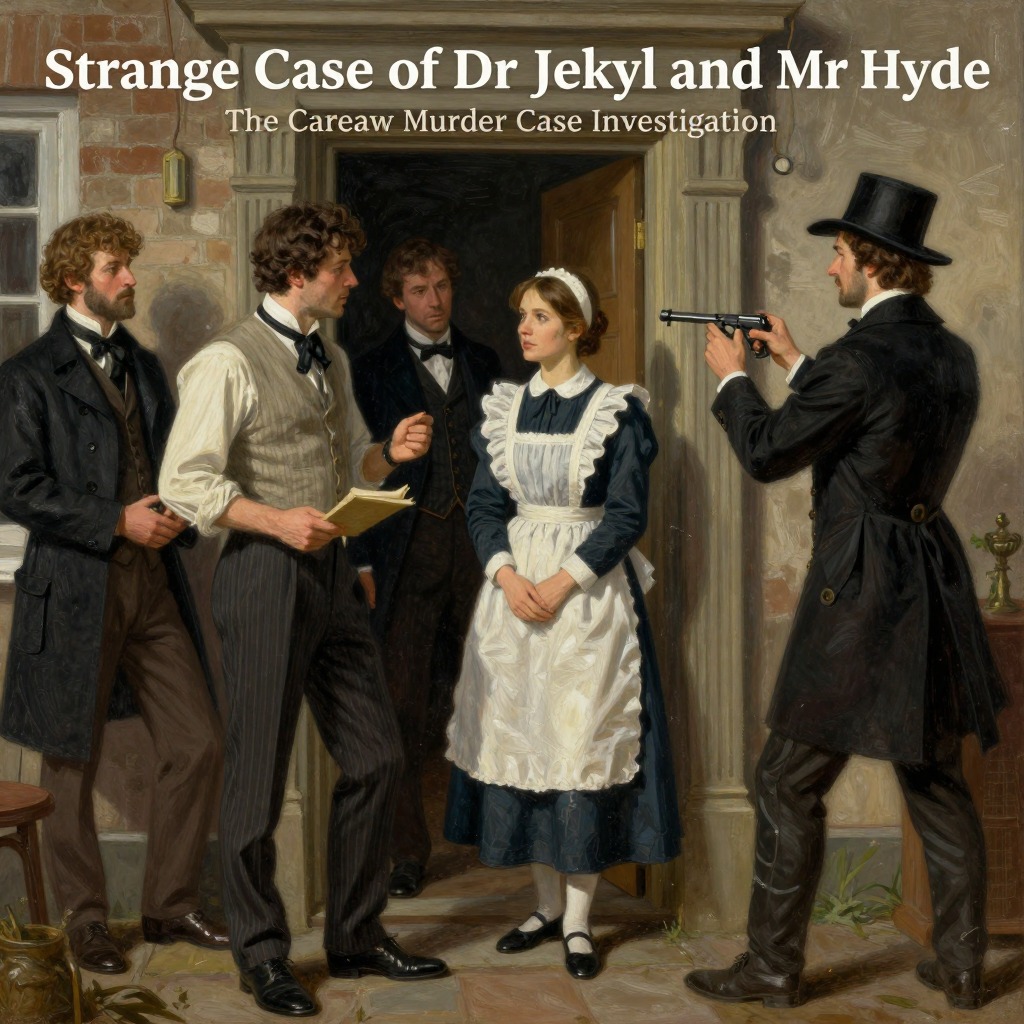
When the body of Sir Danvers Carew is discovered in a moonlit lane, horribly mangled by a heavy cane, the police are called to the scene by a maid who witnessed the attack. The next morning, the broken stick and a sealed envelope bearing Mr. Utterson's name lead the lawyer to identify the victim and, with a quailing heart, to recognize the murder weapon as one he himself had given to Henry Jekyll years before. Utterson directs the police to Hyde's address in Soho, and Inspector Newcomen of Scotland Yard accompanies him there. At the house, the inspector disinters from the hearth a green cheque book that had resisted the fire, and finds the other half of the broken stick behind a door. A subsequent visit to the bank reveals several thousand pounds lying to the murderer's credit. "You may depend upon it, sir," Newcomen tells Utterson, "I have him in my hand. He must have lost his head, or he never would have left the stick or, above all, burned the cheque book. Why, money's life to the man. We have nothing to do but wait for him at the bank, and get out the handbills."
The Failure to Apprehend Hyde
Despite the confidence of Inspector Newcomen, the police's efforts prove fruitless. Thousands of pounds are offered in reward for the death of Sir Danvers, which is resented as a public injury, but Mr. Hyde has disappeared out of the ken of the police as though he had never existed. Much of his past is unearthed—tales of cruelty, a vile life, strange associates, and the hatred that surrounded his career—but of his present whereabouts, not a whisper is heard. From the time he left the house in Soho on the morning of the murder, Hyde is simply blotted out. The police cannot trace his family, he has never been photographed, and the few who can describe him differ widely, agreeing only on the haunting sense of unexpressed deformity he impressed upon beholders. Scotland Yard, for all its resources and the public outcry, is powerless to find a man who can dissolve his identity at will.
Narrative Significance
Scotland Yard's role in the story is to dramatize the impotence of legal and institutional mechanisms when confronted with a crime that originates in a supernatural duality. The police can gather evidence, identify a suspect, and offer rewards, but they cannot penetrate the secret of Hyde's existence because that secret is not a matter of hiding places or false identities—it is a matter of chemical transformation. The force's failure clears the stage for the private investigations of Mr. Utterson and the eventual self-destruction of Hyde, emphasizing that the mystery can only be resolved from within, through the confessions of Dr. Lanyon and Henry Jekyll, not through the external procedures of the law.